
Become The Sexual Health Clinician
your patients have been quietly hoping for.
A practical, real-world course for GPs and medical practitioners who know sexual health comes up in their consults, and want a clear, confident way to handle it. With a certificate of completion for your CPD record.
"Peer-reviewed and published. Structured training measurably shifts doctor attitudes,
confidence, and clinical readiness in sexual health conversations."
International Journal of Sexual Health
Here's what changes in your consults.
The gap, the framework, and the simulator that gets you across it.
Or keep scrolling — everything's below.
You know the moment. You've seen it, felt it, and let it pass.
In my work as a clinical sexologist, alongside twenty-plus years in medical education, I see men who've already been given tadalafil or Viagra by their doctor, sometimes on the first visit, before anyone asked what was actually going on.
I've seen the same gap from the research side. In a study I supervised with a PhD student on breast cancer survivors, one theme came up again and again: doctors asked about wellbeing, they just never asked about sexual wellbeing as part of it. One woman told us, "They talked about saving my life, not about living my life."
If you trained in an Australian medical school, there's a good chance you're one of the 21 out of 23 whose formal sexual health teaching was thin to non-existent. That's not a guess, it's published data, and I wrote about it for MJA InSight+.
"So you move on. And the consult keeps going,
but that part stays under the surface."
Quietly losing erections. Struggling with control. Performance anxiety that no one has named out loud. He hinted. You noticed. The consult moved on.
Dryness that makes sex painful. Desire that disappeared. A relationship quietly drifting. She mentioned feeling "off". You checked her bloods. That was it.
This was never just about sex.
It's confidence. It's identity. It's how a person feels in their own body, and in their closest relationship.
It leaks into everything
When a man starts losing erections, or a woman starts experiencing pain, it doesn't stay in the bedroom. It changes how they show up in life.
Patients stop bringing it up
When it goes unaddressed, patients don't escalate it. They quietly stop mentioning it. The door closes. The appointment keeps happening. That part never does.
You're already the right person
You have the relationship, the trust, the clinical context. You're not missing knowledge. You're missing the moment, and exactly what to say in it.
Most doctors assume this is a knowledge gap.
In practice, it rarely is.
You already know the medicine. What's missing isn't knowledge; it's the moment. What to say when a patient hints but won't say it. What to ask without making it awkward. And what to do the second they open up.
"That's the piece no one taught you.
And it's the piece that changes everything."
Learning it is only the start. You practise it here.
Before a single real patient is in the room, you've already had the conversation.
Inside the course is a library of AI simulated patients you can talk to. Out loud. In real time. Each one is a real scenario, the kind that walks into your clinic every week. You get the length of a real consult to handle it. Then you get honest feedback.
Too clinical? It'll tell you. Too shallow? Too rushed? Dodging the moment? It'll tell you. And when you nail it, it'll tell you that too.
Think of it as a flight simulator for the conversations medicine never trained you to have. Fail safely, as many times as you need, so that when it's a real person sitting across from you, it's already second nature.
You won't feel stuck in those moments anymore.
The shift is subtle, but it's permanent. You'll feel it in the first consult you try.
Patients open up more easily
Because you made it safe. The way you asked, not what you asked, tells them this is a space where they can say it.
Consults that go deeper, faster
Without running over time. You know what to ask, when to stop, and how to move it forward cleanly.
A clear framework, not a script
The 4 Systems Framework™ gives you a way of thinking, not a set of lines to memorise. It works in every presentation, every patient.
A reputation that spreads on its own
Patients talk. The practice that handles what others avoid is the one people send their friends to.
CPD you can count
Structured professional development you can record toward your ongoing CPD requirements.
A more complete clinician
You won't come out a sex therapist or a specialist, you'll come out a doctor who handles the whole patient, including the part nobody else asks about.
This is for doctors who already know this matters.
You know sexual health comes up in your consults, and you feel there's more you could do, but aren't quite sure how.
You want a simple, practical way to handle it, rather than another academic or theoretical course you'll never use on Monday morning.
You've ever thought: "I know I should ask, but I'm not sure how to go there cleanly."
You're comfortable and confident in your medicine, and you want your consults to feel as complete as your clinical knowledge.
This course works, provided you actually use it.
If you go through it, try the conversations, and apply the approach, you'll see the difference. In the first consult. In how patients respond to you.
If you just watch it and move on, nothing changes. Simple as that.
This is built for doctors who intend to use it, not for collectors.
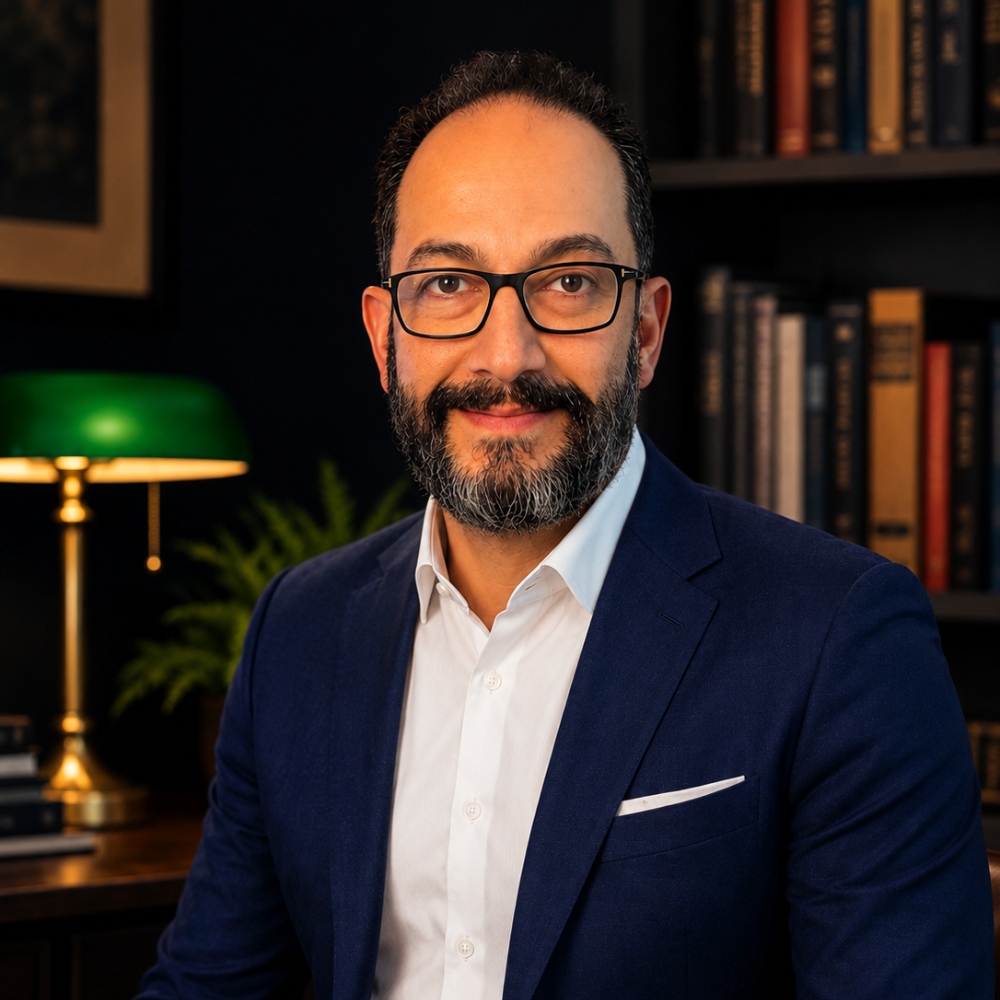
I built this because I kept seeing the same gap, in my own training, and in every clinic I ever worked in.
When I graduated from medical school, patient after patient would quietly open up about their intimate life, not in a textbook way, but in real, vulnerable, messy ways. And they often had nowhere else to go. That stuck with me.
So I kept going deeper: a PhD, graduate diploma in psychology, and eventually accreditation as a clinical sexologist. It wasn't about adding letters after my name, it was about genuinely needing to understand what shapes people's intimate lives, and what actually helps them.
I now teach at Griffith University and serve on the Executive and Advisory Board of the World Association for Sexual Health, the global peak body in this field. I also served as Past President (QLD), Society of Australian Sexologists (2022-2026). I've seen exactly how large the gap is between what doctors know and what they feel able to do in the room. This course is what closes it.
MD · PhD · GradDipPsych
Medicine, neuroscience & psychology, all in one clinical approach.
Associate Professor, Griffith University
Teaching the next generation of clinicians.
Past President (QLD), Society of Australian Sexologists
Served 2022-2026 · National body.
WAS Executive & Advisory Board
Only Australian elected to both boards of the global peak body.











Early feedback from clinicians
From colleagues who previewed the course before launch.
"
After a decade in practice, I had no clean way to open this conversation. The 4 Systems Framework changed that. It finally feels natural, not like stepping into a minefield.
GP
Brisbane
"
The simulated patients are unlike anything I have done in CPD before. I actually got nervous, and then realised that was exactly the point. By the third case it felt completely different.
GP Registrar
Sydney
"
I showed this to a colleague and she said "ooh, can I take it?" before I even described it. That reaction alone told me this course is hitting exactly the right nerve.
GP
Melbourne
Guarantee
The work is the guarantee.
Learn it. Practise it in the simulator until it's second nature. Put it into practice in your room,
and more patients will open up, more will come through your doors, and yes, more revenue follows.
That part takes care of itself.
But if you genuinely go through it, apply it in your practice, and feel it didn't make a difference,
you can request a full refund within 30 days. No complications. Because this isn't about convincing you.
It's about giving you something that actually works.
Please review the full Terms of Service for refund conditions.
Join as a Founding Member
The Sexual Health Clinician is now open to the first cohort. Founding Members get full lifetime access at a permanently reduced rate. This price will not be available once the founding round closes.
The work is the guarantee.
Learn it, run it through the simulator until it's boring, then use it in your next real consult. Patients open up more. More of them stick around. And yes, that tends to mean more revenue, I'm not going to pretend that's some accident or beneath mentioning. If you make your practice a place people trust with the hard stuff, they keep coming back to you for everything else too.
30-day money-back guarantee. Terms and conditions apply.
Dr Armin Ariana
You don't need more information.
You need a way to use what you already know.
Stop stepping past that moment. Start handling it, clearly, confidently, in the time you already have.
Enrol Now, Start TodayLifetime access · CPD eligible · 30-day satisfaction guarantee